Vitamin D: Not Just for “Bones”
Vitamin D: Not Just for “Bones” –
The Secret Key to Immunity and Mental Health You Might Be Lacking
It is a common misconception to think, "Thailand is so sunny, how could anyone possibly lack Vitamin D?" However, the shocking reality is that over 45% of the Thai population suffers from "Vitamin D Deficiency."
Vitamin D is not merely a nutrient that helps absorb calcium for your bones. In modern medicine, it is classified as a "Hormone-like substance." It plays a critical role in the immune system, brain function, and cardiovascular health in ways you might not expect.
Beyond Strong Bones: The Powerful Benefits of Vitamin D
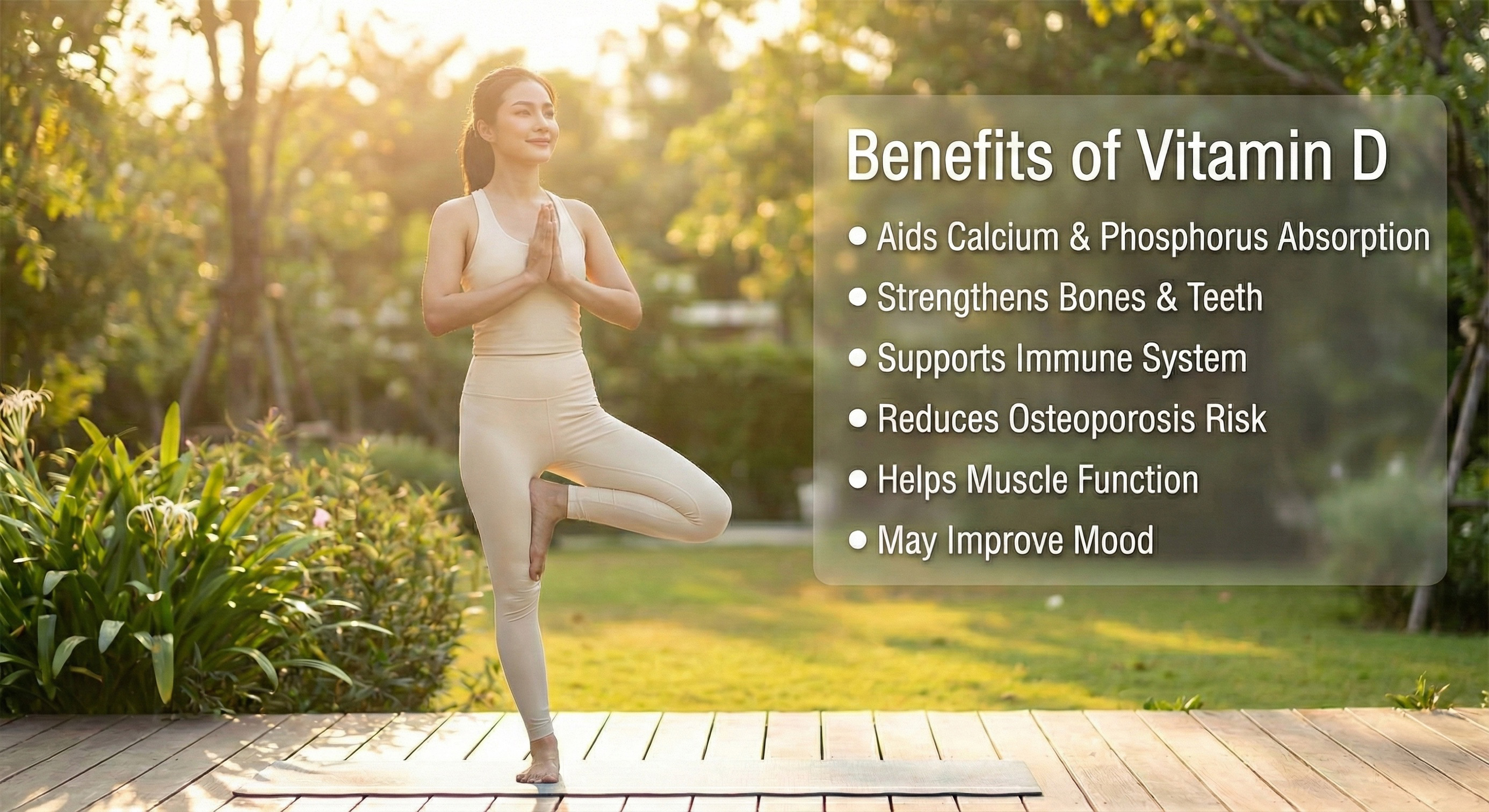
While its primary duty is calcium absorption to prevent osteoporosis and osteopenia, Vitamin D offers immense benefits to other body systems:
1. Boosts the Immune System: It stimulates white blood cells to fight pathogens and helps prevent allergies and autoimmune diseases (such as SLE).
2. Restores Mental Health: It helps reduce stress, fights depression, and improves sleep quality.
3. Controls Chronic Diseases: It aids in regulating blood sugar levels and blood pressure, thereby reducing the risk of cardiovascular disease.
4. Reduces Pain: It helps alleviate pain associated with rheumatoid arthritis.
5. Balances Hormones: It supports the normal functioning of the hormone synthesis system.
Check Now: Are You at Risk of Deficiency?
Even though the body can synthesize Vitamin D from sunlight (UVB) by 80-90%, modern lifestyles often prevent us from getting enough. You are at risk if you:
• Work in an office or stay indoors all day.
• Apply sunscreen regularly (which is necessary for skin protection, but blocks Vitamin D absorption).
• Live in a city where dust and pollution block sunlight.
Groups that should have their Vitamin D levels tested via blood work:
• The elderly (skin synthesis capability decreases with age).
• Working-age women who rarely get sun exposure.
• Individuals prone to infections.
How-to: Properly Replenish Vitamin D
Our bodies receive Vitamin D from two main sources: Sunlight (80-90%) and Food (10-20%).
1. Food Sources
Since we cannot fully rely on sunlight in today's environment, choosing the right food is essential. Focus on:
• Fatty fish: Salmon, Tuna.
• Cod liver oil.
• Egg yolks, mushrooms, grains, certain algae, milk, and dairy products.
2. Daily Requirement
The appropriate amount of Vitamin D depends on age and condition. Here is the recommended daily intake:
• Infants (less than 1 year): 400 IU (10 mcg) per day.
• General Public (1 - 70 years): 600 IU (15 mcg) per day.
• The Elderly (70 years and older): 800 IU (20 mcg) per day.
• Women planning pregnancy: 400 - 600 IU (10 mcg) per day.
วิตามิน D: ไม่ใช่แค่ "เรื่องกระดูก" แต่คือกุญแจลับภูมิคุ้มกันและต้านซึมเศร้า ที่คุณอาจขาดโดยไม่รู้ตัวหลายคนเข้าใจผิดว่า "เมืองไทยแดดแรง ขนาดนี้ ใครจะไปขาดวิตามินดี?" แต่ความจริงที่น่าตกใจคือ ประชากรไทยกว่า 45% มีภาวะ "พร่องวิตามินดี" (Vitamin D Deficiency)
วิตามินดีไม่ได้มีหน้าที่แค่ช่วยดูดซึมแคลเซียมเพื่อกระดูกเท่านั้น แต่ในทางการแพทย์ปัจจุบัน มันถูกยกให้เป็น "Hormone-like substance" หรือสารที่มีฤทธิ์คล้ายฮอร์โมน ซึ่งมีบทบาทสำคัญต่อระบบภูมิคุ้มกัน สมอง และหัวใจ อย่างที่คุณอาจคาดไม่ถึง
7 ประโยชน์ของวิตามิน D ที่มากกว่าแค่กระดูกแข็งแรง
นอกจากหน้าที่หลักในการดูดซึมแคลเซียม ป้องกันโรคกระดูกพรุนและกระดูกบางแล้ว วิตามินดียังมีประโยชน์มหาศาลต่อระบบร่างกาย ดังนี้:
1. บูสต์ภูมิคุ้มกัน (Immune System): กระตุ้นเม็ดเลือดขาวให้ต่อสู้กับเชื้อโรค และช่วยป้องกันโรคภูมิแพ้รวมถึงโรคแพ้ภูมิตัวเอง (SLE)
2. กู้คืนสุขภาพใจ: ช่วยลดความเครียด ต้านภาวะซึมเศร้า และทำให้นอนหลับได้ดีขึ้น
3. ควบคุมโรคร้าย: ช่วยควบคุมระดับน้ำตาลในเลือดและความดันโลหิต ลดความเสี่ยงโรคหลอดเลือดหัวใจ
4. ลดปวด: ช่วยบรรเทาอาการปวดจากโรครูมาตอยด์
5. ปรับสมดุลฮอร์โมน: ช่วยให้ระบบสังเคราะห์ฮอร์โมนทำงานเป็นปกติ
แม้ร่างกายจะสังเคราะห์วิตามินดีได้จากแสงแดด (UVB) ถึง 80-90% แต่ไลฟ์สไตล์ปัจจุบันทำให้เราได้รับไม่เพียงพอ โดยเฉพาะถ้าคุณมีพฤติกรรมเหล่านี้:
• ทำงานในออฟฟิศ หรืออยู่ในร่มตลอดทั้งวัน
• ทาครีมกันแดดเป็นประจำ (ซึ่งจำเป็นต้องทำ แต่ก็บล็อกการรับวิตามินดี)
• อาศัยในเมืองที่มีฝุ่นควันและมลพิษบดบังแสงแดด
กลุ่มที่ควรเจาะเลือดตรวจระดับวิตามิน D:
• ผู้สูงอายุ (ความสามารถในการสังเคราะห์วิตามินผ่านผิวหนังลดลง)
• ผู้หญิงวัยทำงานที่แทบไม่โดนแดด
• ผู้ที่มีความเสี่ยงติดเชื้อง่าย
How-to: เติมวิตามิน D ให้ร่างกายอย่างถูกวิธี
ร่างกายได้รับวิตามินดีจาก 2 ทางหลัก คือ แสงแดด (80-90%) และ อาหาร (10-20%)
1. แหล่งอาหารเติมวิตามิน D
เนื่องจากเราไม่สามารถพึ่งพาแสงแดดได้เต็มที่ในยุคนี้ การเลือกทานอาหารจึงสำคัญ เน้นทาน:
• ปลาที่มีไขมันสูง: แซลมอน, ทูน่า
• น้ำมันตับปลา
• ไข่แดง, เห็ด, ธัญพืช, สาหร่ายบางชนิด, นมและผลิตภัณฑ์จากนม
2. ปริมาณที่แนะนำต่อวัน (Daily Requirement)
ปริมาณวิตามิน D ที่แนะนำต่อวัน (Daily Requirement)
• เด็ก (อายุน้อยกว่า 1 ปี): ควรได้รับวันละ 400 IU (10 ไมโครกรัม)
• บุคคลทั่วไป (อายุ 1 - 70 ปี): ควรได้รับวันละ 600 IU (15 ไมโครกรัม)
• ผู้สูงอายุ (อายุ 70 ปีขึ้นไป): ควรได้รับวันละ 800 IU (20 ไมโครกรัม)
• ผู้หญิงที่วางแผนตั้งครรภ์: ควรได้รับวันละ 400 - 600 IU (10 ไมโครกรัม)